What a Water Damage Restoration Estimate Should Include in Dartmouth, MA
A line-by-line guide to reading an estimate, written for Dartmouth, MA homeowners comparing bids after a leak or flood.
Why an estimate matters so much
After a loss you have little time and a lot to decide. An estimate is the document that tells you what a company will do and what it expects to charge. A vague one leaves room for surprises, and a clear one lets you compare bids.
The goal is not the lowest number. The goal is to understand what you are buying.
Parts of a good estimate
Check each row against the document in your hand.
| Part | What it should say | Why it helps |
|---|---|---|
| Scope by room | Rooms, floors and areas affected | Shows nothing is left out |
| Water category | The category and the reason | Sets the safety steps |
| Tasks | Extraction, removal, cleaning, drying | Tells you what is being done |
| Equipment and days | Types and counts of machines, expected days | Explains most of the price |
| Materials removed | Which materials come out and why | Avoids surprise demolition |
| Disposal | Hauling and dumping costs | Often hidden in lump sums |
| Exclusions | What is not included | Prevents disputes |
| Change process | How added work is priced and approved | Protects you from surprises |
Scope by room
A good estimate lists each room or area, the damage found and the work planned. It should say how the company measured the moisture. A scope that says only water damage repair tells you nothing.
Walk through the house with the estimator. Ask them to show you what they found, not only tell you.
Equipment and drying days
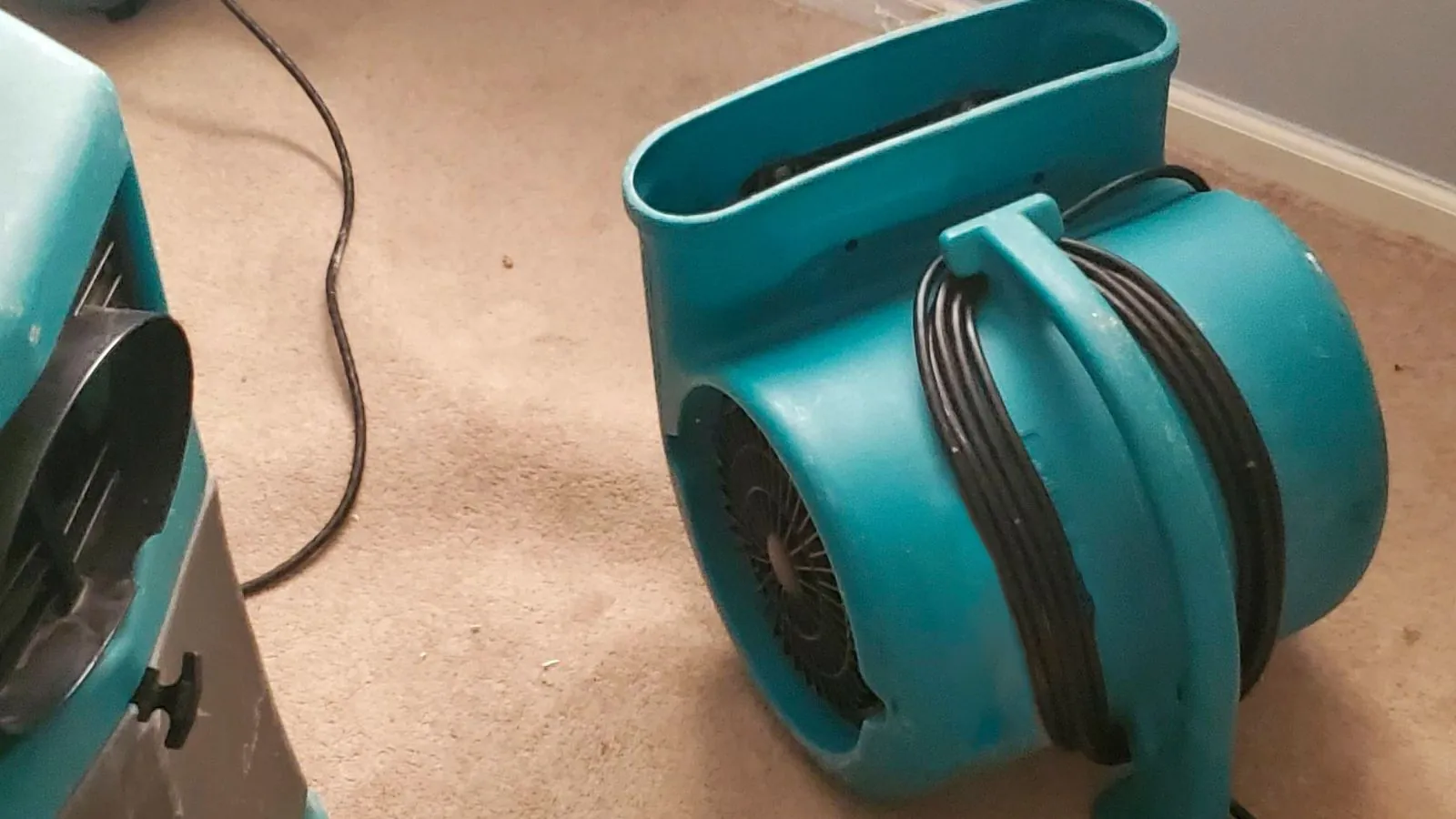
Most of the price in a drying job comes from equipment and time. The estimate should say how many air movers and dehumidifiers will run and for how many days. It should also say how readings will decide when drying stops.
Our structural drying page explains how equipment is sized. Ask why the count fits your rooms.
Materials to remove or save
The estimate should say what comes out, such as wet insulation or baseboards, and what is expected to dry in place. If it says demolition as needed, ask for a limit or an approval step. You should not find a wall missing that you did not expect.
The wall and drywall water damage page explains how those decisions are made.
Prices, factors and what can change
Price depends on the water category, the area affected, the materials involved, drying days and rebuild scope. A good estimate explains these factors. It should also say what could change the number, such as hidden water or extra days.
We explain scope and price before work starts. Want your real number? Call (508) 286-8971.
Exclusions and what comes after
A drying estimate often does not include rebuilding, painting or flooring. Check that the document says so. If a company claims to handle everything, ask for a separate line for reconstruction.
Compare bids by scope, not just by total. A lower bid that leaves out disposal may cost more in the end.
Warning signs in a bid
Be careful of one-line totals, large deposits before work, pressure to sign the same day or a promise to match whatever your insurer pays. Also be careful if the estimator will not explain a line. A clear company answers questions.
You may also hear a promise of a fixed arrival time. A company can aim for same-day response, but a fixed time often depends on conditions that no one controls.
Estimates and your insurance claim
An insurer may want to see the estimate, the photos and the readings. Keep every version and note the date. If the insurer's number differs from the estimate, ask both sides to explain the gap.
The Massachusetts Division of Insurance notes that coverage depends on policy wording. Ask your agent before you sign.
Reading an estimate against your photos
Lay your photos next to the estimate and check each room. Does the estimate match what you saw? Are there rooms you photographed that the estimate does not mention? Mismatches are common, and a quick call can fix them.
Ask the estimator to note any wet area you point out, even if it looks small. It is easier to add a line now than to argue about it later.
How to compare two bids
Put the two bids side by side and make a simple table. List rooms, tasks, machine counts, days, disposal and exclusions. Mark any line that appears in one bid and not the other.
A bid that looks cheaper may leave out disposal or extra days. A bid that looks high may include items the other skipped. The difference is often in the details.
Taxes, permits and other small lines
Ask whether the estimate includes permits, if any are needed, and whether taxes apply. Ask about parking or access fees if you live in a dense area. These small lines add up and are easy to forget.
Dartmouth Town Hall can tell you which repairs need permits. Ask the company who pulls the permit and who pays.
When the estimate changes after demolition
Opening a wall can reveal more water than the estimate assumed. A good company stops, shows you photos and explains what changed. It then prices the added work and asks for your approval.
Keep the photos and the revised estimate with your first copy. They show how the job grew and why.
A short list to bring to the visit
Bring your photos, your policy number, a floor plan sketch and a list of questions. Note the water source and the time you found it. The more the estimator knows, the more precise the estimate.
Write the estimator's answers on your copy as you talk. It beats trying to remember them later.
Category and class on an estimate
A good estimate reflects the ANSI/IICRC S500 standard for water damage restoration, which defines the water category and the drying class a job falls under.
If an estimate does not mention either, ask the company to add them.
Dartmouth considerations for an estimate
Dartmouth homes include many built before 1960, per SRPEDD. Plaster, old subfloors and masonry can dry slowly, so ask how the estimate accounts for that.
Coastal humidity slows drying. Ask whether the company expects extra days in humid months.
Dartmouth Town Hall at 400 Slocum Road can tell you whether the repair needs a permit. Ask whether the estimate includes permits, if any apply.
Nearby towns
The same checklist applies near the town line. See water damage restoration in New Bedford and water damage restoration in Acushnet for notes on nearby areas.
Bring the list to every estimate visit.
Questions Dartmouth homeowners ask
Yes. A written scope protects both sides.
It can if hidden water appears, but the change should be explained and approved first.
Ask what it covers. Be wary of large deposits before work starts.
Often not. Check whether it is a separate line.
Yes, by scope, equipment, days and exclusions, not just the total.
It can document the loss. Coverage is the insurer's decision.
Water still spreading?
Want a clear scope and price? Call the 24/7 line. We explain both before work starts.