Emergency Flood Damage Cleanup in Dartmouth, MA
Floodwater is an emergency from the first inch. Call the 24/7 line, stay out of the water, and we start planning cleanup in Dartmouth right away.
When floodwater in your home is an emergency
Floodwater carries mud, bacteria and whatever it picked up on the way in. That is why it is treated differently from a burst pipe, and why speed matters. The 24/7 line at (508) 286-8971 is open nights, weekends and holidays for flood cleanup across Dartmouth.
While you wait, keep everyone out of the water, including pets. Do not switch on lights or appliances in a flooded room, and do not walk through standing water near outlets. If you can reach the panel while standing in a dry spot, shutting off power to the flooded area is sensible. Otherwise call the utility first.
Take photos of the water line on walls and belongings before anything is moved. Those photos help later with an insurance claim.
How flooding reaches Dartmouth homes
Dartmouth has about 20 miles of shoreline on Buzzards Bay, Clarks Cove and the Slocums River, Little River and Apponagansett Bay estuaries. The town master plan lists flood-prone spots including the Padanaram Village causeway, Little River Road, Russells Mills Village, Smith Neck Road and Eddy Street. It also notes that storm surge can cut off emergency access to Padanaram Village.
In practice that means two kinds of flood calls. Coastal homes see tidal surge and wind-driven water, while inland low spots near brooks and culverts see overland runoff after heavy rain. Knowing which one you have changes how the cleanup is planned. Your FEMA flood zone, which you can look up on the FEMA flood map for your address, also decides whether flood insurance applies.
Floodwater category and what it means
The ANSI/IICRC S500 standard classes outside floodwater as Category 3. That is a safety rule, not a scare tactic, and it is why carpet and pad that sat in floodwater are usually removed.
| Water source | Category | What changes in the job |
|---|---|---|
| Clean supply line or rainwater from a roof | Category 1, can degrade | Standard extraction and drying |
| Appliance discharge or sump overflow | Category 2 | Added cleaning and disposal of porous materials |
| Rising tidal or river water, groundwater with soil | Category 3 | Protective gear, removal of porous materials, disinfection |
| Sewage mixed into floodwater | Category 3 | Containment and strict disposal, see sewage backup cleanup |
What flood cleanup involves
1Make the space safe
We check for electrical hazards, confirm the water category and set up protective steps before anyone works in the wet area.
2Remove the water
Pumps and extraction units clear standing water. For a flooded lower level, see the water extraction page for the tools used.
3Remove what cannot be saved
Soaked carpet pad, insulation and the lower section of contaminated drywall are cut out and bagged for disposal.
4Clean, treat and dry
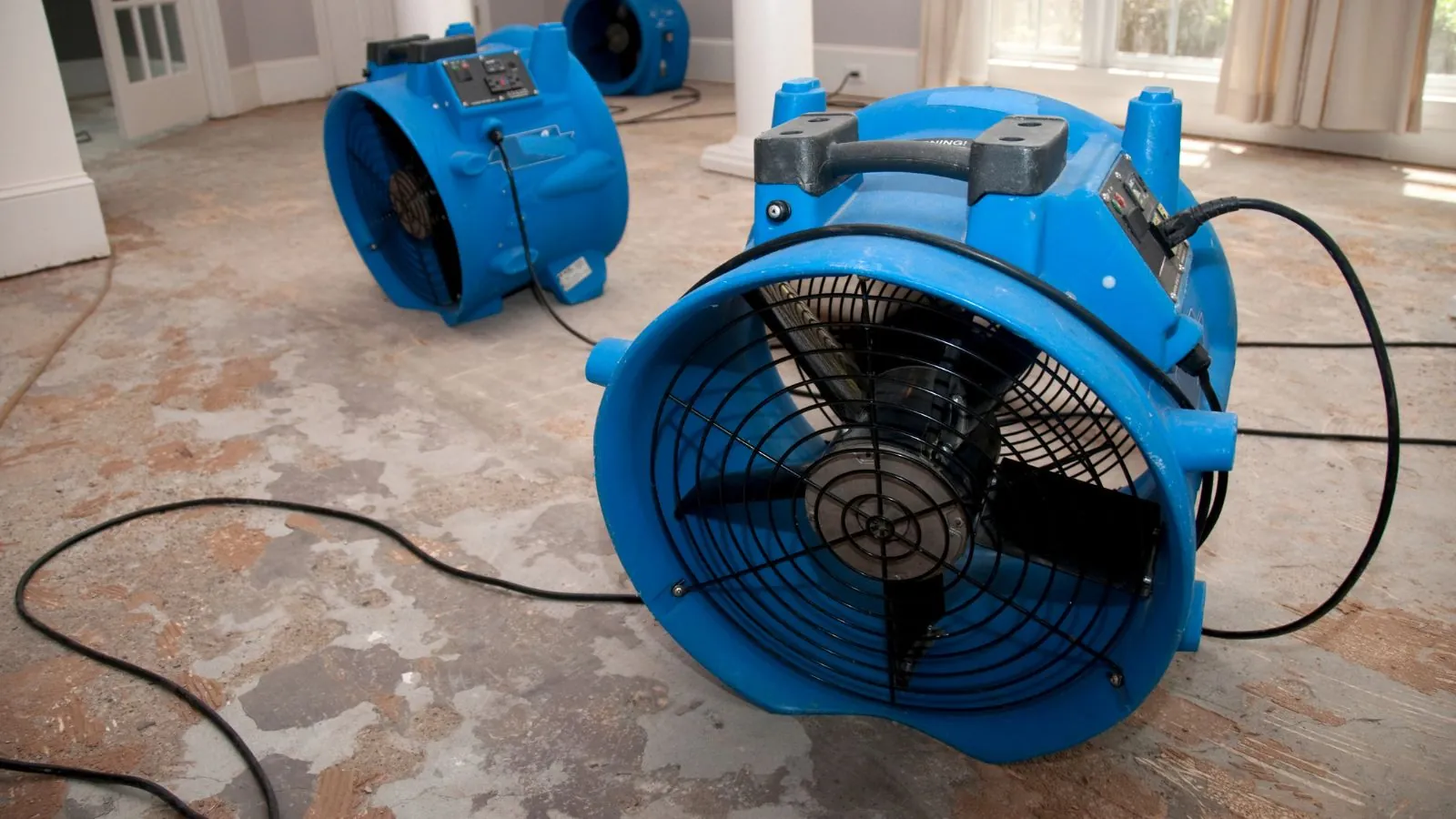
Surfaces are cleaned and treated, then air movers and dehumidifiers dry the structure. Moisture readings show when it is dry enough to rebuild.
Flood and your insurance policy
Standard homeowners policies do not cover flood. Massachusetts Division of Insurance guidance says basement seepage generally has no endorsement available, and sewer backup coverage is usually an add-on. Flood insurance is a separate policy through the National Flood Insurance Program or a private insurer.
Rain that enters through a damaged roof can be treated differently from rising water at ground level. Read your policy, call your agent early and ask which cause applies to your loss. We document the damage, and the carrier decides coverage.
What to do before help arrives
- Stay out of floodwater, since it can carry contaminants and touch live wiring.
- Cut power only if the panel is on dry ground. Otherwise call the utility.
- Move valuables up and photograph the water line.
- Do not run a household vacuum or fans in wet areas.
What drives the cost of flood cleanup
The number depends on how much water came in and what it touched. Here is what moves it.
Water category
Outside floodwater is Category 3 and adds disinfection and disposal steps.
Area affected
Square footage and how many rooms the water reached.
Materials involved
Carpet, hardwood, drywall and insulation each follow different salvage rules.
Drying days and equipment
Water that soaked into framing takes more days and more machines.
Rebuild scope
Replacing floors, walls and trim is priced separately from cleanup.
Call (508) 286-8971 for a scope and price explained before work starts.
Flood water in your home?
The line is open 24/7. Stay out of the water, shut off what you safely can and call. We respond the same day when we can.
Flood cleanup questions in Dartmouth
Yes. The 24/7 line at (508) 286-8971 is staffed for flood calls on nights, weekends and holidays. We respond the same day when we can and make no promise of a fixed arrival time.
No. Floodwater can hide electrical hazards and carries contamination. Wait for guidance, and call the utility if the water is near the panel.
Usually not when the water came from outside. Floodwater is treated as Category 3, so carpet and pad are normally removed. Hard surfaces can often be cleaned and dried.
Look up your address on the FEMA flood map or ask the Dartmouth Building Department. Your mortgage lender and insurance agent can also tell you.
Generally no. Flood is a separate policy, and sudden non-flood leaks are handled differently. Check your policy and report the loss quickly.
Often several days for the structure, longer for thick framing or wet insulation. Moisture readings, not the calendar, decide when drying is done.