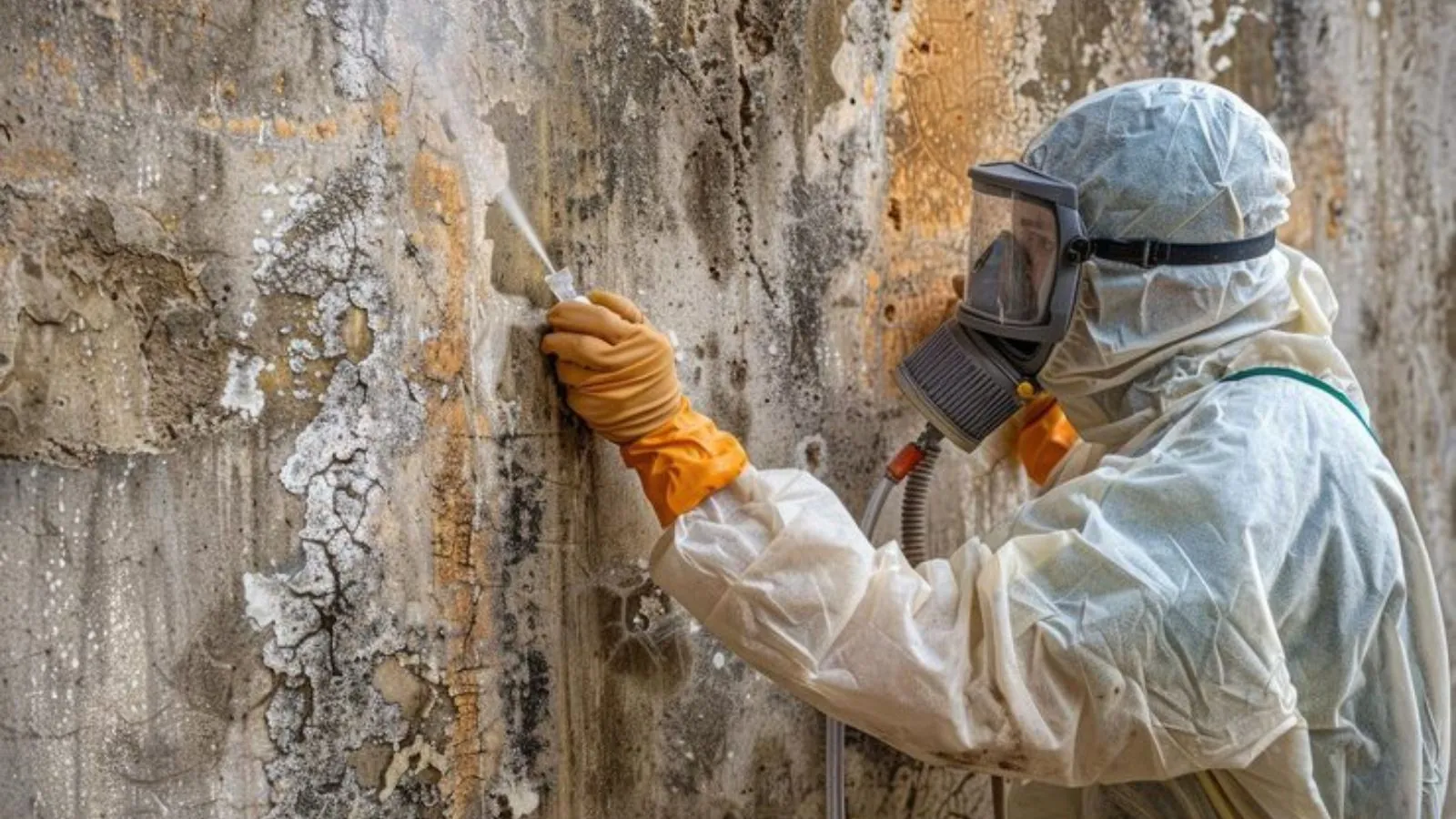
Mold Remediation in Dartmouth, MA
Musty smells, fuzzy spots or a past leak that never fully dried can point to mold. We find the moisture, contain and remove it, and explain clearance.
Musty smell, spots on walls or a leak that never fully dried?
Mold needs moisture, and it grows on damp drywall, wood, insulation and carpet. A spot can be small on the surface and larger behind it. We make no health claims, and anyone with health concerns should talk with a physician.
The line at (508) 286-8971 is open 24/7. Describe what you see and we take it from there.
How a leak becomes mold
Mold growth usually starts after water that was not dried. A pipe leak behind a wall, a wet carpet pad or a damp basement corner can all hold moisture. If materials stay wet for days, growth can begin. Drying fast is the best way to prevent it.
That is why the first step is to find and fix the moisture source. Remediation without a dry structure is only a temporary clean. See structural drying for how drying works.
Mold work compared
Mold work follows a set order. This table shows the main steps based on the ANSI/IICRC S520 standard.
| Step | What happens | Why it matters |
|---|---|---|
| Find the moisture | Meters and a thermal camera locate wet areas | Mold returns if moisture remains |
| Contain | Plastic barriers and air filtration limit spread | Disturbing mold can move spores |
| Remove | Porous materials with growth are removed and bagged | They cannot be fully cleaned |
| Clean and dry | Surfaces are cleaned and the structure is dried | Moisture control is the key |
| Clearance | A separate tester checks the result | Useful for a sale or a loan |
How mold remediation works
1Inspect and scope
We look at the area, find the moisture source and describe the work before it starts.
2Contain the area
Barriers and negative air limit spread during removal.
3Remove and clean
Affected porous materials come out, and hard surfaces are cleaned.
4Dry and verify
Dehumidifiers run until readings are dry, and clearance testing can follow.
Clearance testing for a home sale or loan
A buyer, lender or insurer may ask for proof that mold work is finished. Clearance testing is done by an independent tester who samples the air or surfaces after remediation. We do not do the testing ourselves, since the tester should be independent of the remediation company.
If a sale or loan is coming up, ask the tester what documents they need before work begins. Keep the scope of work, photos and clearance report together for the closing file.
Mold rules in Massachusetts
According to Mass.gov, Massachusetts does not require a state license for mold remediation. That puts the burden on you to ask each contractor what they include, how they contain the area and how they handle moisture. Compare written scopes before you agree.
We are licensed and insured. We do not make health claims, and we do not promise that mold will never return, since new moisture can start new growth.
What drives mold remediation cost
Mold jobs vary widely. These factors set the price.
Water category
The original water source affects what is wet and how contaminated it is.
Area affected
The size of the growth and the surrounding wet area.
Materials involved
Drywall, wood framing, insulation and carpet.
Drying days and equipment
Dehumidification continues until readings are dry.
Rebuild scope
Replacing removed materials is separate from remediation.
Sudden water damage that leads to mold is sometimes covered, while mold from long-term moisture often is not. Check your policy. Want your real number? Call (508) 286-8971.
Think you have mold?
Call the line, open 24/7. We explain scope and price before work starts.
Mold remediation questions
A musty smell, stains, bubbling paint or a past leak are common signs. Moisture readings help confirm it.
We remediate. An independent tester does clearance testing for a sale or a loan.
Bleach is not a fix for mold in porous materials. Removing the damp material and drying is the sound approach.
It can if moisture returns. Fixing the source and drying the area are the main protection.
Mass.gov says no state license is required, so ask each contractor what they do and compare scopes.
Sometimes, when it follows covered water damage. Check your policy.