Structural Drying and Dehumidification in Dartmouth, MA
If your home still feels damp after a leak, the structure may still be wet. We map the moisture and dry it. The line is open 24/7.
Musty smell, damp walls or a floor that will not dry?
These are the signs of moisture left in the structure after a leak or flood. Walls can feel cool and damp, a floor can stay tacky, and a closed-up room can smell musty for days. The trade name for the fix is structural drying, which means measuring the moisture and drying wood, drywall and concrete with controlled equipment.
The line at (508) 286-8971 takes calls 24/7. You do not need to know the term. Tell us what you see and where the water was.
What structural drying means
Structural drying is a controlled process, not just running fans. Technicians record moisture in each material, place air movers and dehumidifiers to match the room, and check readings daily until the structure reaches drying goals. The industry reference is the ANSI/IICRC S500 standard.
Surface-dry is not structure-dry. Framing and subfloors hold water long after the surface feels fine, and that trapped water is where mold and warping come from.
The equipment, in plain words
Each tool has a clear job. Together they make drying measurable.
- Moisture meters read how wet wood, drywall and concrete are, and show change from day to day.
- Thermal imaging cameras show cool, wet areas behind a wall without opening it.
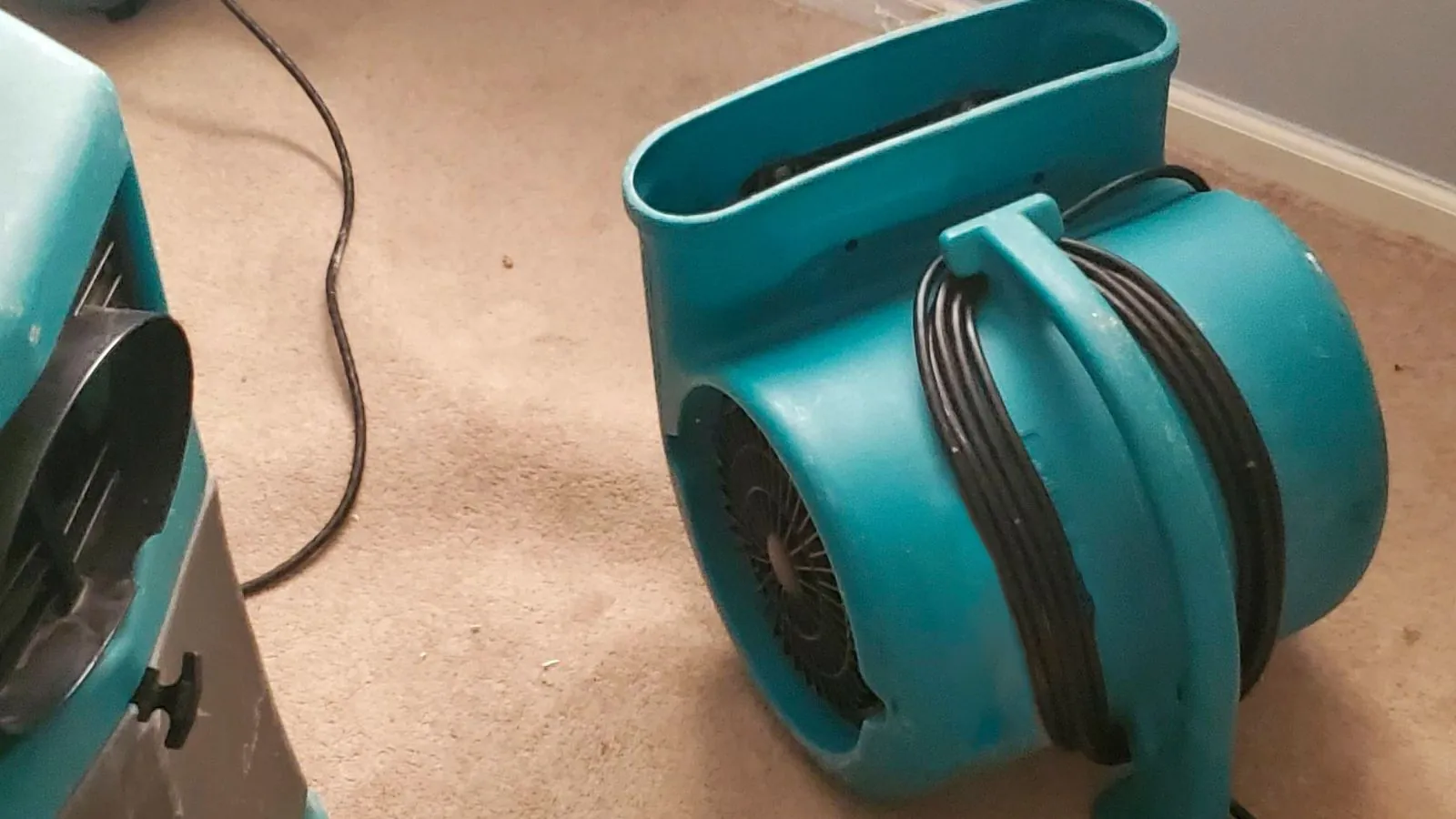
- Air movers push air across wet surfaces so moisture leaves the material.
- Dehumidifiers pull the moisture out of the air so drying does not stall. LGR units are common, and desiccant units are used in cold or very damp spaces.
- Hygrometers track air humidity so the room stays in a dry range.
Common materials and how they dry
Different materials need different drying approaches.
| Material | Drying behavior | Notes |
|---|---|---|
| Drywall | Absorbs fast, dries moderately | Soft or crumbly sections are removed |
| Framing and joists | Holds water, dries slowly | Needs time and airflow |
| Concrete slab or block | Very slow | Dehumidification matters more than air movement |
| Plaster and lath | Slow, can loosen | Checked for hidden moisture behind it |
| Hardwood and subfloor | Slow, can warp if rushed | See hardwood floor water damage |
When structural drying is the right call
Not every wet home needs a full drying setup. A small spill that was wiped up within hours rarely does. A leak that ran behind a wall, a flooded basement, a soaked subfloor or any loss older than a day often does, because the water is no longer where you can see it.
If you are unsure, a technician can take readings in a few minutes. The readings show whether materials are above normal and whether drying equipment is worth running. Ignoring a damp structure often costs more later, in rebuilding and in mold.
For losses caused by outside water or sewage, drying follows cleanup and removal first. The water extraction page explains that earlier step.
Typical drying process
1Map and record
Readings are taken in each wet material to set drying goals.
2Place equipment
Air movers and dehumidifiers are set up, often with containment to focus drying.
3Monitor daily
Technicians return, check readings and adjust equipment as areas dry.
4Confirm and remove
When readings meet goals, equipment is removed and a final reading is recorded.
Drying days vary. Moisture readings decide the end, not a set number of days.
What to do before help arrives
- Stop the water source and remove standing water if it is safe.
- Do not turn up the heat to dry a wet room, since heat can push moisture deeper.
- Keep fans pointed away from contaminated areas.
- Photograph the wet areas and write down the time you found them.
What drives structural drying cost
Equipment and time set most of the price. These factors drive it.
Water category
Cleaner water usually needs less preparation.
Area affected
Size of the wet area decides the number of machines.
Materials involved
Concrete, framing and plaster take longer than drywall.
Drying days and equipment
Machine count times days is a main cost driver.
Rebuild scope
Repairs after drying are separate.
Sudden and accidental water damage is often covered by a homeowners policy, though flood is usually excluded. Check your policy. Want your real number? Call (508) 286-8971.
Still damp after a leak?
Call us. The line is open 24/7. We explain the scope and price before work starts.
Structural drying questions
The surface can dry while the framing, subfloor or slab stays wet. Moisture readings show whether the structure is truly dry.
Often several days, longer for thick framing or concrete. Readings decide, not the calendar.
Fans alone move wet air around. Dehumidifiers remove the moisture so drying continues.
Air movers and dehumidifiers make steady noise. We tell you what to expect and plan around your schedule when possible.
No. We do not offer equipment rentals. We set up, monitor and remove it ourselves.
We compare readings to a dry reference from the same material. When they match, drying goals are met.