How to Remove Mold in a Basement in Dartmouth, MA: Safe Steps
A step-by-step guide for Dartmouth, MA homeowners who plan to clean limited basement mold and want to know what is safe to try.
Know what this guide covers
This guide is for limited growth on hard, nonporous surfaces such as sealed concrete, tile, metal or glass. It does not cover growth on drywall, insulation, carpet or inside walls, because those materials usually have to be removed and bagged. If your problem looks like that, see our mold remediation page.
We make no health claims in this guide. Anyone with breathing or immune concerns should talk with a physician and skip the cleanup.
The cleanup steps in order
Follow these steps in order and stop if the problem is larger than expected.
1Fix the moisture first
Stop the leak, clear the drain or add a dehumidifier. Cleaning without fixing the cause only buys time.
2Gear up
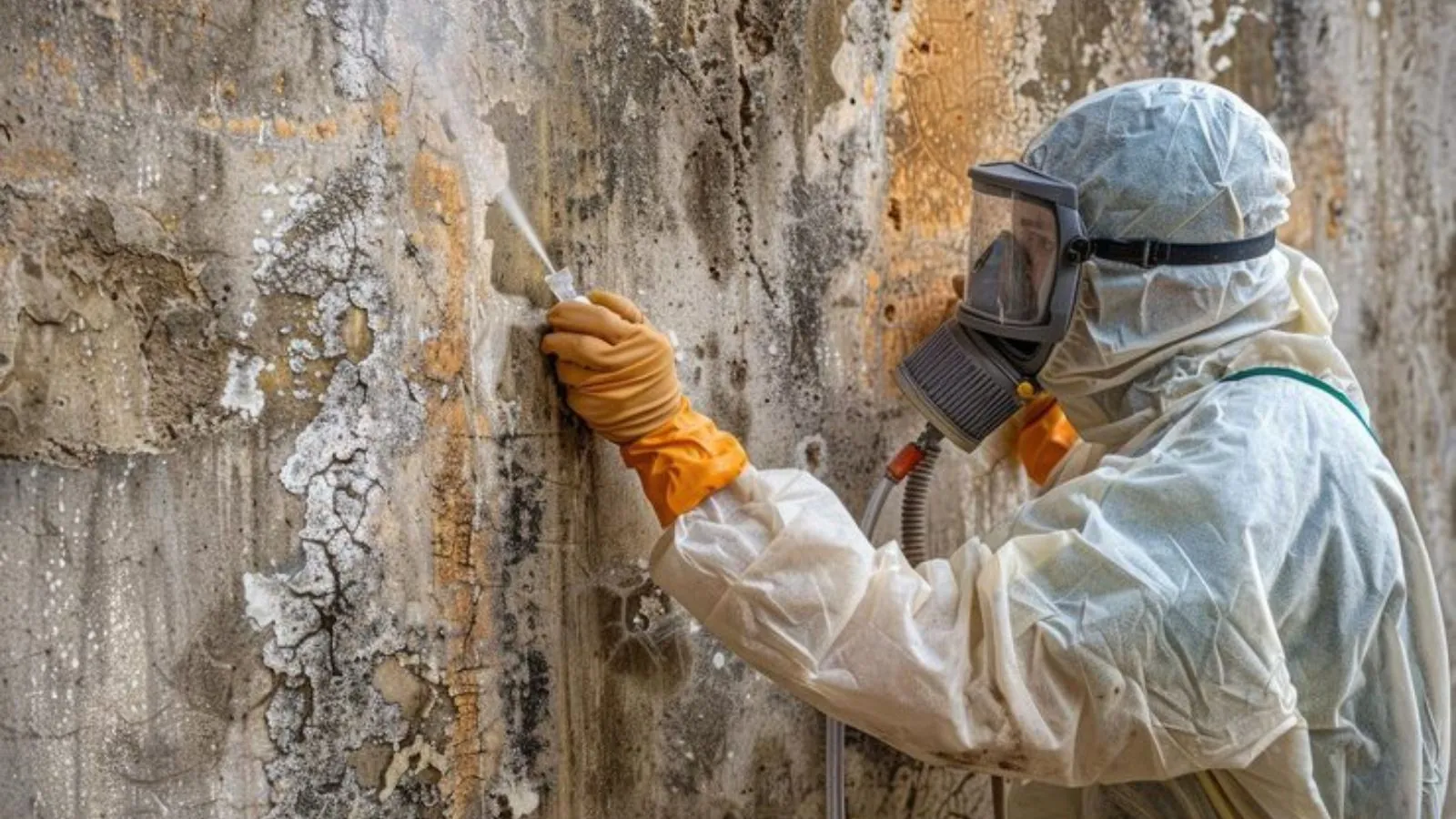
Wear a fitted particle respirator, gloves that reach the forearm and sealed eye protection.
3Isolate the area
Close doors, cover vents and keep fans from blowing into the rest of the house.
4Clean gently
Use detergent and water with a damp cloth or stiff brush. Avoid dry scrubbing that throws dust into the air.
5Dry and bag
Dry the surface fully, bag used cloths and wipes, and wash your clothes right away.
What to wear and why
A fitted respirator matters more than a dust mask because loose masks leak at the edges. Gloves protect the skin, and sealed goggles keep spores out of the eyes. Old clothes you can wash on hot are a good idea.
Keep the work area small and manageable. Stop for breaks outside, and do not eat or drink in the basement while you work.
What not to do
Do not mix bleach with ammonia or other cleaners, because the fumes can be dangerous. Do not paint over mold, since it can grow through the coating and the paint will peel. Do not blow fans across the work area, and do not carry bags of moldy material through the house unsealed.
Do not clean porous materials and call them done. Drywall, insulation and carpet that grew mold usually have to be removed.
Safe to clean vs usually removed
Material type decides what can be cleaned. This table gives common outcomes.
| Material | Usually | Notes |
|---|---|---|
| Sealed concrete or block | Clean and dry | Check that the surface is not leaking |
| Metal, glass, tile | Clean and dry | Hard surfaces clean well |
| Painted wood trim, light growth | Sometimes cleanable | Replace if soft or stained through |
| Drywall and plaster board | Remove | Paper facing holds moisture |
| Insulation and carpet pad | Remove | They soak up moisture and cannot be fully cleaned |
| Cardboard boxes and books | Discard or inspect | Paper holds moisture and spores |
Drying and keeping the space dry
After cleaning, run a dehumidifier until the basement feels dry and the humidity stays below the range your device recommends. Lift stored items off the floor and leave space between boxes and walls so air can move. A humidity gauge is cheap and tells you when the air gets damp again.
If a leak caused the problem, drying is part of the repair. Our structural drying page explains how professional drying works.
When to stop and call a professional
Stop if the growth is larger than a small patch, if it keeps coming back, if you smell a strong musty odor with no visible source, or if the basement flooded with sewage or floodwater. Also stop if you cannot find the moisture source. A professional can map moisture with meters and a thermal camera.
Write down what you see and take photos before you start. If an insurance claim or a sale is possible, those photos help.
Choosing a professional if you need one
Ask for a written scope that explains containment, removal and drying. Mass.gov says Massachusetts does not require a state license for mold remediation, so ask about insurance and how they handle air filtration. Ask who will do clearance testing, since independent testing is usual for a sale or loan.
If the basement flooded first, see our basement water damage page for the water side of the work.
After the cleanup: a short checklist
Check the cleaned area daily for the first week, then weekly for a month. Look for returning spots, a musty smell or damp patches on the floor. Keep the dehumidifier running and empty its tank often.
Move stored items away from walls and onto shelves. Replace cardboard boxes with plastic bins that seal. If anything returns, treat it as a sign that moisture is still present and call a professional.
Using the right cleaner safely
Plain detergent and water is enough for most hard-surface cleanup. Read the label of any other product and follow its directions on ventilation and contact time. Never mix products.
Rinse cleaned surfaces with clean water and dry them well. Leftover moisture invites regrowth.
Where professional standards start
Professional mold remediation follows the ANSI/IICRC S520 standard, which covers containment, removal and verification.
The cleanup steps above are for small hard surfaces only. Anything beyond that is where S520 methods apply.
Dartmouth basements and humidity
Dartmouth sits on a coastal water table, and the town master plan lists flood-prone spots such as Little River Road, Eddy Street and Old Fall River Road. Basements near those places can stay damp after heavy rain.
About 45 percent of homes in southeastern Massachusetts were built before 1960, per SRPEDD. Older block and stone foundations tend to be more porous, so check the walls after storms.
Water in a basement can also come from sewer or sump problems. The town has no combined sewer overflows, but New Bedford does, and they affect Clarks Cove and Buzzards Bay.
A note for homes near the city line
If your home is close to New Bedford or Acushnet, read our notes on water damage restoration in New Bedford and water damage restoration in Acushnet. Older homes there face similar foundation issues.
Whatever the town, the steps above stay the same. Fix the moisture, clean what is safe and call a pro for the rest.
Questions Dartmouth homeowners ask
Detergent and water work for hard surfaces. Never mix bleach with ammonia, and do not rely on bleach for porous material.
Close off the area and avoid blowing air into the rest of the house. Open a window only if it does not push dust inward.
Until the space feels dry and readings stay stable. Keep it going whenever the air turns damp again.
Paint only after the surface is dry. Painting over active growth does not stop it.
The moisture source is probably still active. Stop and call a professional.
High humidity and a close water table make dehumidifiers and good drainage worth the effort.
Water still spreading?
Mold larger than a small patch? Call the 24/7 line. We explain scope and price before work starts.