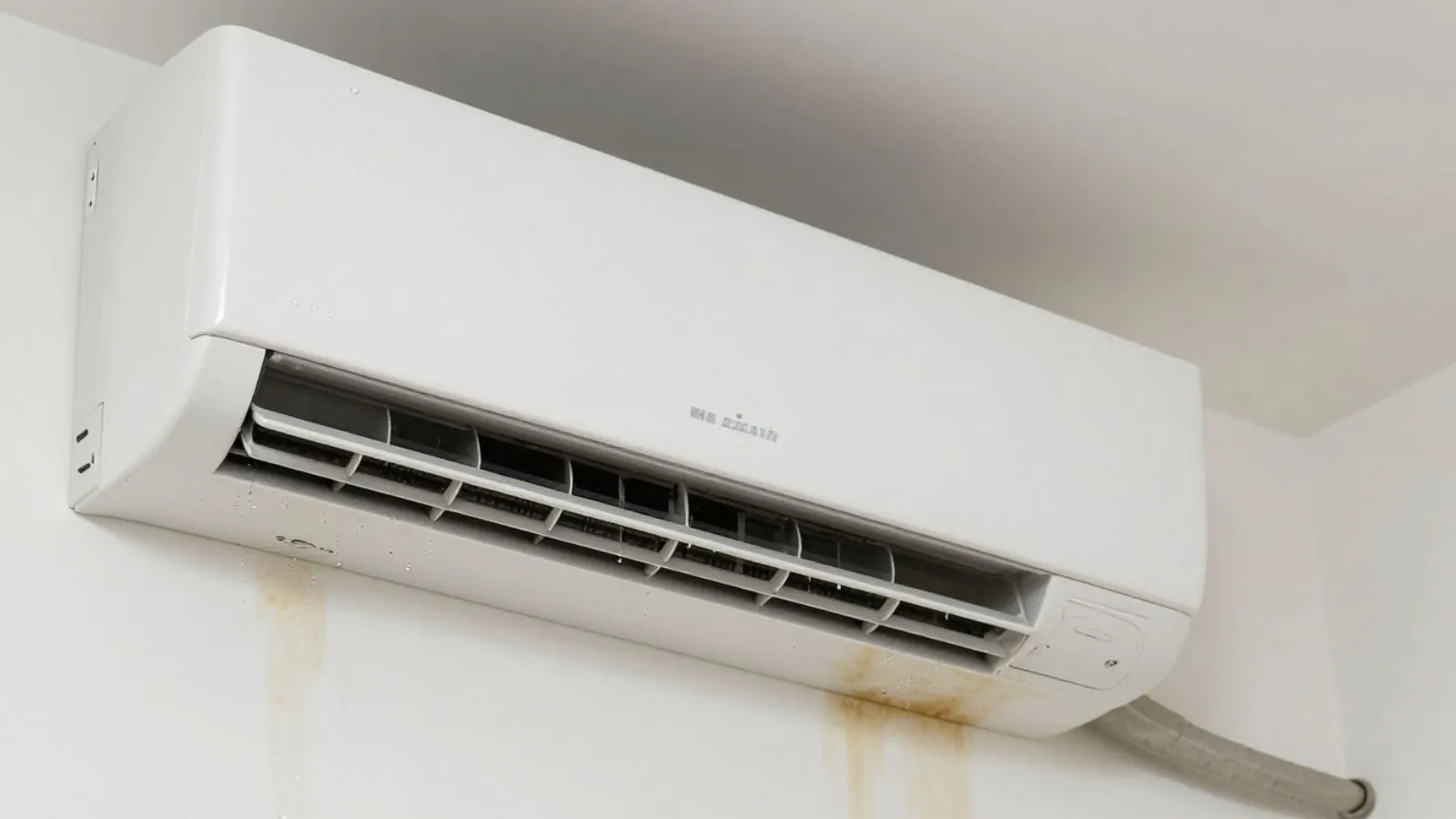
AC Leak Water Damage Repair in Dartmouth, MA
A clogged condensate line can stain a ceiling or wet an attic for weeks. We dry the damage and tell you what to ask your HVAC contractor. Line open 24/7.
How an air conditioner leaks inside a home
Cooling coils produce water, and a drain line carries it away. When that line clogs, freezes or cracks, the pan overflows and water runs into the ceiling, wall or floor below. Unit and coil leaks tend to show first as a stain near an air handler or vent.
Because the leak can run for weeks before anyone notices, the damage is often larger than the stain. The line at (508) 286-8971 is open 24/7, and we can dry what is wet while you call an HVAC contractor about the unit.
Where the water goes
Attic air handlers drip onto insulation and ceilings. Closet units leak into walls, and basement units leak into the floor. Ductless wall units can drip down a wall from a blocked line. Each path leaves a different pattern, and each needs a different opening to dry it.
Many Dartmouth homes use attic or closet air handlers, and a condensate pan in an attic can overflow for a long time before a ceiling shows it. A stain below an attic unit should be checked from above.
AC leak signs and likely cause
The pattern points to the source. This table lists the usual signs.
| What you notice | Likely cause | First step |
|---|---|---|
| Stain or drip near a ceiling vent | Overflowing pan or clogged drain line | Turn off the system, check the pan, call HVAC |
| Wet floor by a closet air handler | Clogged line or cracked pan | Shut off the unit and dry the area |
| Water trail below a wall unit | Blocked drain on a ductless head | Turn off and call HVAC |
| Damp insulation or musty attic | Long-running drip | Moisture check of ceiling and framing |
How AC leak water damage is handled
1Turn off the unit
Stopping the system stops the water. An HVAC contractor fixes the line, pan or coil.
2Find the wet area
Meters and a thermal camera locate wet ceiling, wall or insulation.
3Remove and dry
Wet insulation and drywall come out and the space is dried. The ceiling water damage repair page describes the process.
4Prepare for repair
After drying, new drywall and paint can go in.
Prevention between service visits
Most AC leaks come from a drain line clogged by algae and dust. A yearly flush of the line, a clean filter and a float switch that shuts the unit off when the pan fills all reduce the risk. A secondary pan under an attic air handler gives you a second line of defense.
Look at the pan and the drain outlet once at the start of the cooling season. If the outlet is dry on a hot day when the unit has been running, the line may be blocked, and that is worth a call before the first stain appears.
If you are away from home for days in summer, a leak can run the whole time. A visual check by a neighbor, or a water sensor near the unit, shortens that window.
Insurance and HVAC leaks
Insurers often treat a sudden overflow differently from a slow leak that went unnoticed. Ongoing neglect, such as an unmaintained drain line, can affect coverage. Check your policy, report promptly and ask your agent how long-term seepage is handled.
Keep the HVAC contractor invoice that names the cause. It helps document that the failure was sudden or found promptly.
What to do before help arrives
- Turn off the air conditioner at the thermostat and the breaker if the panel is dry.
- Do not touch wet fixtures or light switches near the ceiling.
- Place a bucket under drips and do not poke at a bulging ceiling.
- Take photos of the stain, the vent and the drain pan.
Why condensate water is not always clean
Condensate water is often treated as Category 2 under the ANSI/IICRC S500 standard for water damage restoration because it can carry growth from the drain pan.
That matters because it changes what we remove from a wet ceiling or insulation.
What drives AC leak water damage cost
The job is usually small if caught early. These factors set the price.
Water category
Condensate is usually clean but can carry dust and growth in the pan.
Area affected
The size of the stain is often smaller than the wet area.
Materials involved
Insulation, drywall and any finished flooring below.
Drying days and equipment
Attic and wall cavities may need extra airflow.
Rebuild scope
Drywall, paint and insulation replacement are separate.
Want your real number? Call (508) 286-8971. We explain the scope and price before work starts.
AC dripping inside?
Turn the unit off and call. The line is open 24/7, and we respond the same day when we can.
AC leak water damage questions
Yes. That stops new water. Then have an HVAC contractor clear the line or replace the pan.
Stains that appear in summer, near a vent or air handler, and grow when the system runs point to the AC.
Moisture can lead to mold if it stays. We make no health claims, and drying quickly lowers the risk.
No. An HVAC contractor repairs the unit. We handle the water damage.
It can, if the leak was sudden or found promptly. Long-running leaks may be excluded. Check your policy.
The same day if possible. Water in insulation and drywall keeps spreading.